For a literal cultivation system — realms, breakthroughs, qi, tribulations and a lifespan clock — Tale of Immortal is the fullest, with Amazing Cultivation Simulator for running a sect and Yi Xian: The Cultivation Card Game for a realm ladder in card form. Western fantasy games rarely have cultivation outright: Kenshi, Skyrim and Rogue Legacy are cultivation-adjacent, each capturing one part of it. Our own Immortal Cards is a xianxia deckbuilder.
One of the most common searches we see is some version of "a Western fantasy game with Eastern cultivation mechanics". It usually comes from readers of cultivation novels and progression fantasy who want the feeling of climbing a power ladder — not just gaining levels — in a game. The honest answer is that very few Western-developed games use cultivation directly; the real thing lives mostly in Chinese-developed games. But several Western games have systems that capture one piece of it.
This guide first explains what makes a mechanic "cultivation" rather than ordinary levelling, then lists PC games that have it. Each entry says plainly whether it is literal cultivation or cultivation-adjacent. We list the developer and the year each first came out. One entry is our own game, clearly marked.
What a cultivation mechanic actually is
"Cultivation" comes from xianxia (仙侠) fiction, where mortals refine their bodies and spirits to become immortal. In games it is built from five recurring parts:
- Realms. Power is divided into named tiers — in the novels, ladders like Qi Condensation, Foundation Establishment, Golden Core and Nascent Soul. Each realm is a qualitative jump: new abilities, a new league of opponents, a longer life.
- Breakthroughs. Moving from one realm to the next is not automatic. You build up to the threshold, prepare, and attempt it — and the attempt can fail or set you back.
- Qi and resources. Spiritual energy, herbs, pills, spirit stones, technique manuals and treasures. Much of the game is gathering and refining these into progress.
- Tribulations. Heavenly trials, classically bolts of lightning, that strike at major breakthroughs. Surviving them is the price of moving up.
- Lifespan. Each realm extends your life, so time is a resource. A cultivator who stalls simply grows old and dies.
The combination is what matters. A game with levels has a ladder; a cultivation game makes the step between rungs risky, makes time scarce, and makes each rung feel like a different kind of being.
Cultivation, progression fantasy and LitRPG
Progression fantasy is the Western web-fiction label for stories where getting stronger is the plot. Chinese cultivation novels are one of its main roots, and some Western series use cultivation directly — Will Wight's Cradle is the best-known example. LitRPG is a close cousin that makes the system explicit: levels, stats and skill windows the characters can see.
In games, that difference matters. Almost every RPG has LitRPG-style levels and skills, so "games with levelling" is not a useful search. What readers of cultivation fiction are usually after is the extra layer: thresholds that can fail, a limited lifespan, and power that changes in kind, not only in number. That is the lens for the list below.
8 games with cultivation systems
01 Tale of Immortal
Developer Guigu StudioEarly access 2021Chinese title 鬼谷八荒
An open-world sandbox where you create a cultivator and try to reach immortality in a world full of other cultivators, sects, monsters and secret realms. Combat is real-time and top-down; between fights you meditate, refine, socialise and make enemies.
Literal cultivation, and the most complete version of it on PC: realms, breakthroughs that are a gamble, tribulations, and lifespan as a resource all sit in the same simulated world.
It is a Chinese xianxia world, not a Western fantasy one, and a sandbox first: little hand-holding and a lot of systems to learn.
02 Amazing Cultivation Simulator
Developer GSQ GamesFull release 2020Early access 2019
A colony-management sim in the spirit of RimWorld, set in a xianxia world. You build and run a sect: assign work, feed and house disciples, and guide the most promising ones through cultivation breakthroughs, alchemy and feng shui.
Literal cultivation, seen from above. If the appeal of cultivation for you is the system — resources in, breakthroughs out — managing a whole sect gives you more of it than any single hero could.
You manage many characters instead of being one. If you want to personally climb the ladder, Tale of Immortal is the better fit.
03 Yi Xian: The Cultivation Card Game
Developer Darksun StudioFull release 2024Early access 2022Chinese title 弈仙牌
A cultivation-themed deckbuilding card battler. Every match starts with an empty deck, and as you climb from Qi Refining into higher realms you gain access to stronger cards. Its headline mode pits you against other players online, with a single-player roguelike mode alongside.
Literal realm ladder, compressed into one match: the realm you reach decides which cards you can use.
It covers realms well but is a card game, so lifespan, tribulations and the wider world are not part of it. Mostly online and competitive.
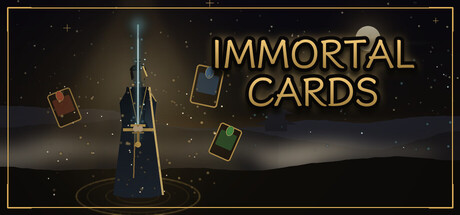
04 Immortal Cards
Developer ShengyuStudioReleased June 21, 2026Chinese title 闲鱼修仙录
A roguelike deckbuilding card game set in a Chinese xianxia world. You choose one of three cultivators, build a deck from 214 spell cards, and master the Five Elements across three procedurally generated acts, with 98 encounters, 42 relics and 12 formations.
Cultivation here is the theme and the shape of the run: the Five Elements system and formations decide every build, random encounters branch each attempt, and your cultivation can end in one of 9 endings. The 21 difficulty levels give it a long climb after your first clear.
It is a deckbuilder, not a cultivation simulator, so don't expect an open world or a lifespan clock — and it is set in a Chinese xianxia world rather than a Western one. Single-player only.
05 The Scroll of Taiwu
Developer Conchship GamesEarly access 2018Chinese title 太吾绘卷
A deep martial-arts sandbox RPG. You are the heir of the Taiwu bloodline in a procedurally generated world of sects and villages, learning techniques, building a village and passing your legacy to the next generation when you die.
Lifelong growth through technique manuals, plus a legacy that outlives each character — the lifespan side of cultivation, done as a generational sandbox.
Cultivation-adjacent. It leans wuxia: grounded martial arts rather than immortals, realms and tribulations.
06 Kenshi
Developer Lo-Fi GamesFull release 2018Early access 2013
An open-world squad sandbox set in a harsh, sword-and-ruin wasteland. You start with almost nothing, and your characters' stats improve by doing things — fighting, getting beaten, sneaking, working — until a beggar can become a feared warlord.
It captures the "temper yourself through hardship" side of cultivation better than any Western game we know: strength is earned slowly, often painfully, in a world that does not scale to you.
Cultivation-adjacent. No qi, no realms, no breakthroughs — growth is a smooth climb of individual stats.
07 The Elder Scrolls V: Skyrim
Developer Bethesda Game StudiosReleased 2011
A Western open-world fantasy RPG. Skills improve by using them, your character level rises as your skills do, and as the Dragonborn you absorb the souls of slain dragons to unlock Shouts.
The use-it-to-improve-it skill system and the idea of absorbing a powerful essence to unlock new abilities are the nearest thing in mainstream Western fantasy to refining qi into power.
Cultivation-adjacent. It is a classic level-and-skill RPG: no realms, no risky breakthroughs, no lifespan.
08 Rogue Legacy
Developer Cellar Door GamesReleased 2013
A 2D roguelite platformer set in a Western fantasy castle. Each time your character dies, you choose an heir with random traits, and the gold you earned goes into permanent upgrades that every later generation inherits.
It turns death and succession into the progression system — the closest arcade-sized take on cultivation's lifespan-and-legacy theme.
Cultivation-adjacent. It is an action platformer; there is no realm ladder, and lifespan here means a single run.
Quick comparison
| Game | Setting | Cultivation parts it has | Literal or adjacent |
|---|---|---|---|
| Tale of Immortal | Xianxia | Realms, breakthroughs, tribulations, lifespan, refining | Literal |
| Amazing Cultivation Simulator | Xianxia | Breakthroughs, alchemy, feng shui — for a sect | Literal |
| Yi Xian | Xianxia | Realm ladder inside each match | Literal (realms only) |
| Immortal Cards (ours) | Xianxia | Five Elements, formations, 9 endings | Xianxia theme, deckbuilder structure |
| The Scroll of Taiwu | Wuxia | Technique manuals, lifetime growth, legacy | Adjacent |
| Kenshi | Wasteland fantasy | Stats that grow through hardship | Adjacent |
| Skyrim | Western fantasy | Use-based skills, dragon souls unlock Shouts | Adjacent |
| Rogue Legacy | Western fantasy | Heirs and inherited upgrades | Adjacent |
Pick by what you like
- "I want the full cultivation system" — Tale of Immortal.
- "I want to build a sect of cultivators" — Amazing Cultivation Simulator.
- "I want a realm ladder in card form" — Yi Xian: The Cultivation Card Game, or our Immortal Cards for a solo xianxia deckbuilder.
- "I want lifetime growth and a family legacy" — The Scroll of Taiwu.
- "I want a Western world where I earn strength the hard way" — Kenshi.
- "I want a classic Western fantasy RPG with practice-based skills" — Skyrim.
- "I want generations and inheritance in a short game" — Rogue Legacy.
A note on what we left out: there are Western-developed games that use cultivation themes, but we only list games we are confident really have the systems described. If a game merely has an Eastern-inspired skin over ordinary levelling, we did not count it. For the genre background, see our guide to xianxia and cultivation games on PC.
FAQ
What is a cultivation mechanic in games?
A progression system borrowed from xianxia fiction: power comes in named realms, moving up requires a breakthrough that can fail, resources like qi, pills and techniques fuel progress, major breakthroughs bring tribulations, and each realm extends a limited lifespan.
Are there Western fantasy games with Eastern cultivation mechanics?
Not many that we can vouch for. The literal versions on PC are mostly Chinese-developed, such as Tale of Immortal and Amazing Cultivation Simulator. Western games like Kenshi, Skyrim and Rogue Legacy are cultivation-adjacent: each captures one part — hardship-driven growth, practice-based skills, or legacy.
What is the difference between cultivation and LitRPG?
LitRPG is about visible game-like systems — levels, stats and skills. Cultivation is a specific progression model with realms, risky breakthroughs, tribulations and a lifespan. Many progression fantasy stories mix both.
Is there a cultivation deckbuilder?
Yes. Yi Xian: The Cultivation Card Game has a realm ladder inside each match, and our own Immortal Cards is a single-player xianxia roguelike deckbuilder. Our cultivation card games guide compares them.